
Learning Tips · Grammar
Ser vs Estar with Adjectives: The Rule That Actually Works

Ser and estar both translate as “to be”, and choosing between them is one of the first real puzzles for English speakers learning Spanish. Most of us were taught a neat rule: ser for permanent things, estar for temporary ones. It sounds sensible. It also lets you down at the first corner.
In this article I am going to look at one situation only: ser and estar with adjectives, the words we use to describe people and things (tall, tired, cheerful, clean). Ser and estar are also used for place, time and events, but those follow their own logic, and mixing everything together is exactly what makes the topic feel impossible. I will deal with them in a separate article.
Why “permanent or temporary” doesn’t work
Nothing is more permanent than death. Yet in Spanish you say:
- Cristóbal Colón está muerto. (Christopher Columbus is dead.)
never es muerto. And it works the other way round too. Youth is about as temporary as anything in life, yet you say:
- Ella es joven, pero está bastante enferma. (She is young, but she is quite ill.)
If the rule were about how long something lasts, both sentences would be wrong.
So why is the rule taught at all? Mostly because it is how many of us first met Spanish at school. “Permanent or temporary” is easy for an eleven-year-old to grasp, whereas the idea of an “essential” quality is a philosophical one, and hard to explain to a child. So schools use the shortcut. It works for a while, but it leads straight to mistakes like es muerto, and as adults we can manage something better.
The real question: is it part of what something is?
Since receiving the European Award for Languages in 2001, through co-writing ¡Ponte al Día! (Hodder & Stoughton) and in more than 30 years training Spanish teachers for British schools, this is the explanation I keep coming back to:
- Ser describes an essential quality: something that, in the speaker’s eyes, is part of what a person or thing is.
- Estar describes a non-essential quality: a state or condition the person or thing is in, which is not part of what it is.
Back to Columbus. Being dead is not part of who Columbus was. He was a navigator, he crossed the Atlantic in 1492, and five centuries later he is still Christopher Columbus. Being dead is simply the state he is in: Colón está muerto. Being alive works the same way: Mis geranios todavía están vivos, a pesar del calor. (My geraniums are still alive, despite the heat.)
Compare these pairs:
- La mesa es redonda. (The table is round.) / La mesa está limpia. (The table is clean.)
- Juan es alto. (Juan is tall.) / Juan está enfermo. (Juan is ill.)
- La casa es grande. (The house is big.) / La casa está cerrada. (The house is shut up.)
- Los niños son guapos. (The children are good-looking.) / Los niños están dormidos. (The children are asleep.)
Round is part of what that table is. Clean is a state it happens to be in: wipe it or spill coffee on it, and it is still the same table.
Same adjective, different message
Many adjectives can go with either verb. Both options are correct; they simply say different things.
- Carmen es alegre. (Carmen is a cheerful person.) / Carmen está alegre. (Carmen is in a cheerful mood. Perhaps she has had good news.)
- Mis padres son simpáticos. (My parents are nice people.) / Mis padres están muy simpáticos. (My parents are being very nice.)
- El cielo es azul. (The sky is blue: that is what skies are like.) / Hoy el cielo está gris. (The sky is grey today.)
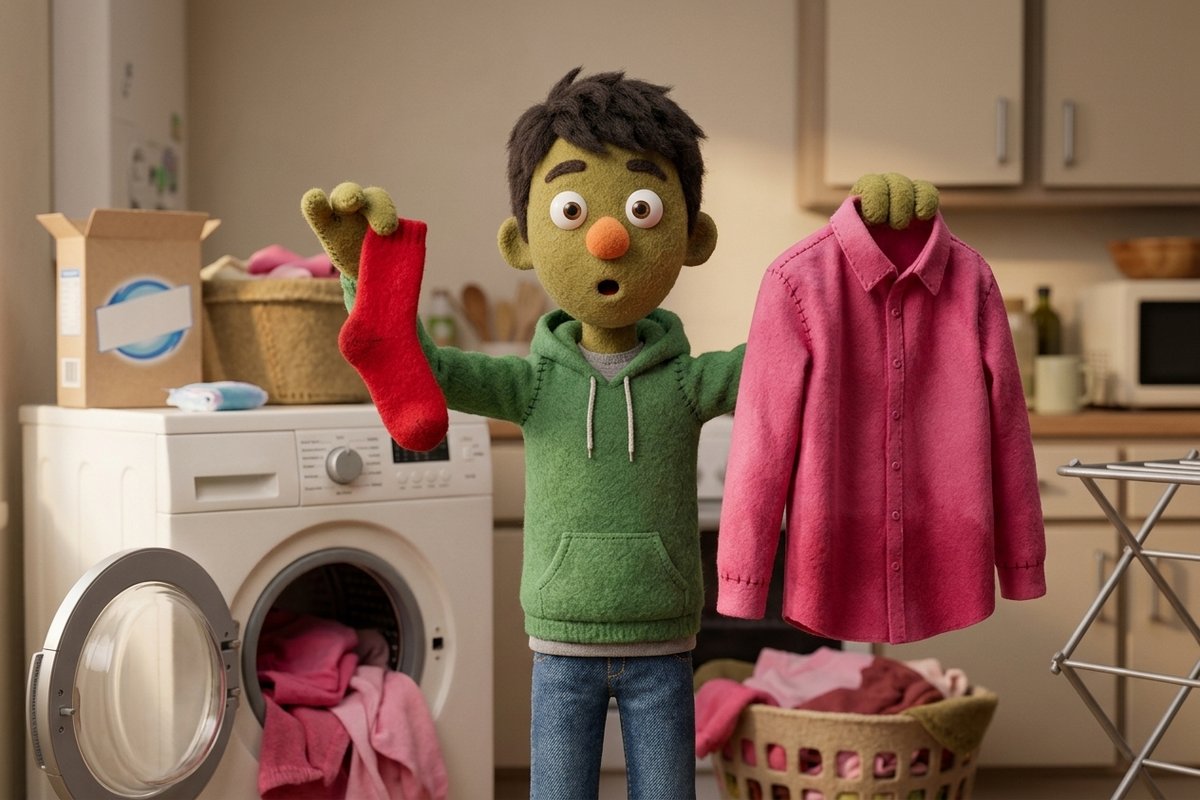
- La ropa es blanca. (The clothes are white.) / La ropa está rosa. (The clothes have turned pink. Every young person who leaves home learns this one the hard way.)
One pair is worth learning for its own sake, because you will hear it in Spain all the time:
- ¡Qué guapa eres! (You are beautiful!) / ¡Qué guapa estás! (You look lovely!)
The second is about how she looks today, and it is the compliment Spaniards use most.
It depends on who is speaking: the story of Juan
Here is the part most explanations leave out. What counts as essential is not a fact about the world. It is the speaker’s view.
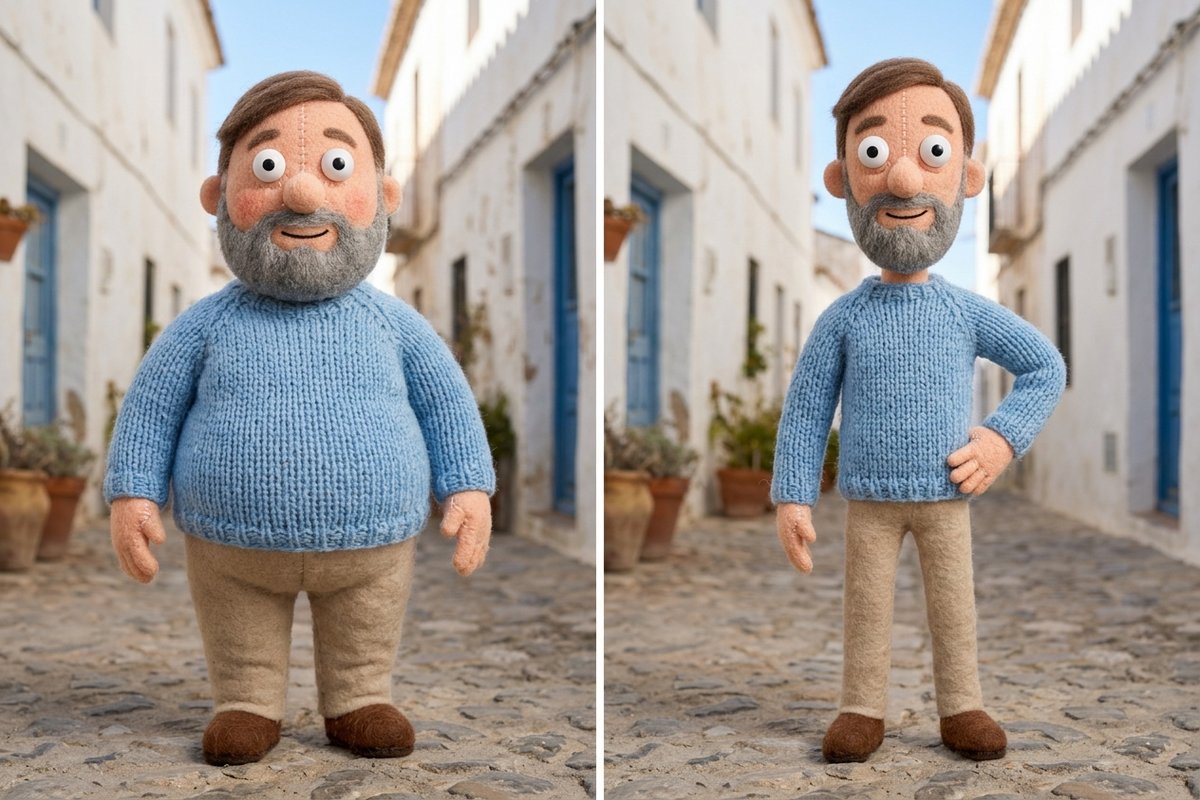
Imagine I met Juan in 2000, when he was quite heavy. For me, that is what Juan is like: Juan es gordo. You met the same Juan in 2010, after he had lost a lot of weight. For you, Juan es delgado.
Now it is 2026 and we both bump into Juan. He is still slim. You say: Juan es delgado, because that is how you have always known him. I say: ¡Juan está delgado!, because for me slim is a change, a state he is in now.
Same man, same day, same adjective, and we are both right. This is why no list of “ser adjectives” and “estar adjectives” will ever work completely: the choice depends on how you see the person or thing.
Adjectives that change meaning
A handful of adjectives mean something different with each verb:
- ser listo = to be clever / estar listo = to be ready
- ser malo = to be bad (a bad person, a bad film) / estar malo = to be ill
- ser rico = to be rich / estar rico = to taste delicious: ¡La tortilla está muy rica!
- ser vivo = to be quick-witted / estar vivo = to be alive
- ser aburrido = to be boring / estar aburrido = to be bored
- ser bueno = to be good (a good person, a good book) / estar bueno = to taste good: La paella está buenísima.
A word of warning about that last one: said of a person, está bueno or está buena means they are physically attractive, in a rather cheeky way. Best kept for the food.
And a curiosity you may hear from older Spaniards: no estoy muy católico means “I’m not feeling too well”. It has nothing to do with religion.
Common mistakes
- Saying soy aburrido when you mean estoy aburrido. You have just told everyone you are a boring person, not that you are bored.
- Trusting “permanent or temporary”. Remember está muerto and es joven.
- Saying la sopa es fría when your soup has gone cold. That is la sopa está fría. But el gazpacho es frío: that is how gazpacho is meant to be.
- Learning long lists of adjectives by verb. Ask the question instead: is this part of what it is, or a state it is in?
- Freezing mid-sentence. A slip between ser and estar rarely stops anyone understanding you. Keep talking.
Try it yourself
Fill each gap with the right form of ser or estar. These come from the worksheets I use in class.
- Juan ___ muy tranquilo, pero hoy ___ nervioso.
- Estos zapatos ___ muy cómodos, pero ya ___ muy viejos.
- Nuestra casa ___ bastante antigua, pero ___ bien conservada.
- Este niño ___ muy simpático, pero ahora ___ enfadado.
- Mi coche ___ pequeño, y ahora además ___ roto.
Answers: 1 es, está · 2 son, están · 3 es, está · 4 es, está · 5 es, está.
In summary
- Forget “permanent or temporary”: está muerto and es joven prove it wrong.
- Ser + adjective: an essential quality, part of what someone or something is.
- Estar + adjective: a state or condition, not part of what it is.
- Many adjectives take both verbs, and each says something different.
- What is essential depends on the speaker, as the story of Juan shows.
- A few adjectives change meaning: listo, malo, rico, vivo, aburrido, bueno.
In a future article we will look at ser and estar for place, time and events, which follow a logic of their own. And if you are wondering whether it is worth starting at your age, read Is It Too Late to Learn Spanish at 50, 60 or 70?
Fernando Pérez Cos